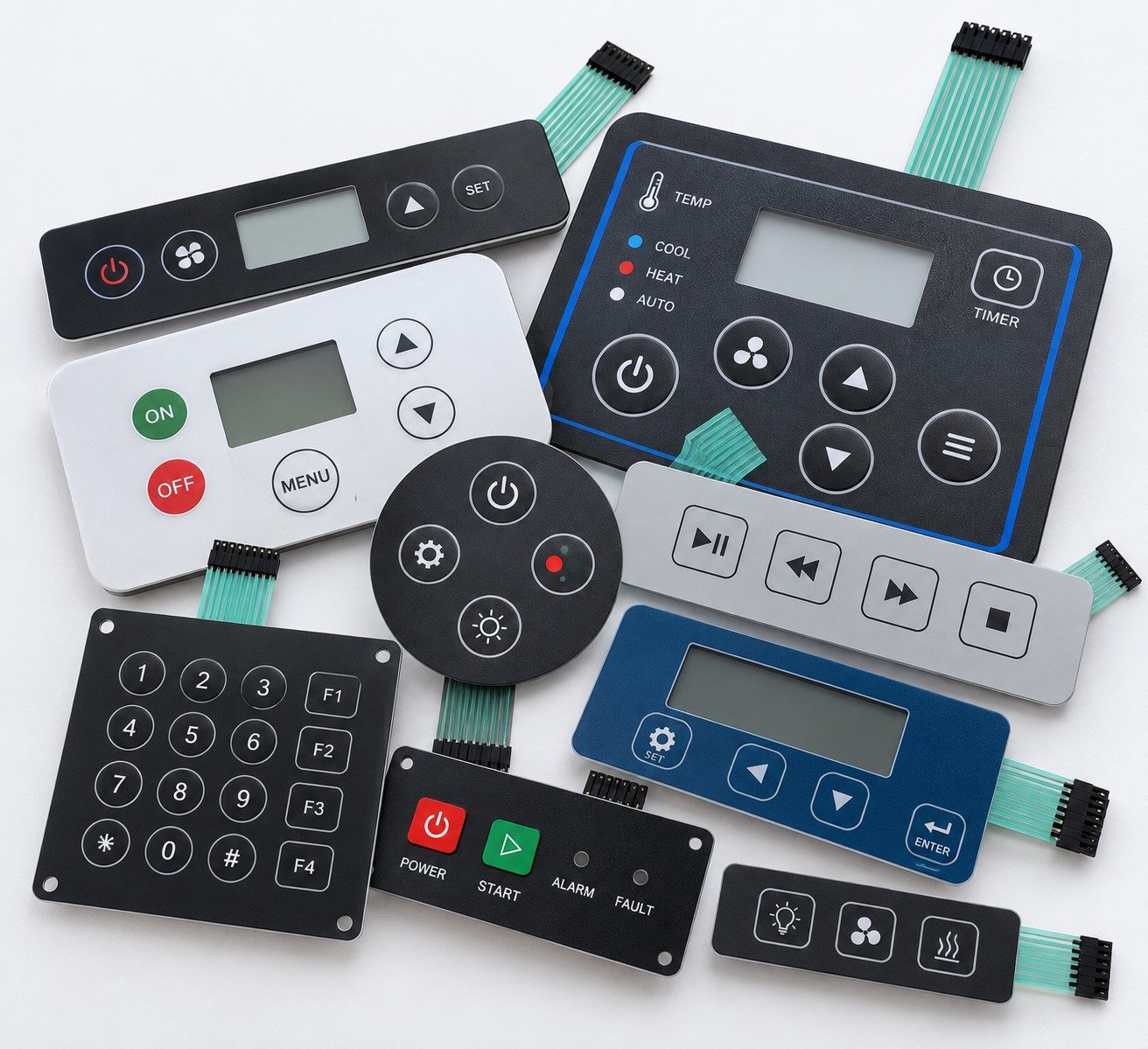
Paper Labels
Common for cartons, retail packs, product information, and dry packaging.

StikTec label guide
Self-adhesive labels are printed constructions that attach when pressure brings the adhesive into contact with a product surface. They are widely used for packaging, branding, information, barcode tracking, warnings, and industrial identification.
Overview
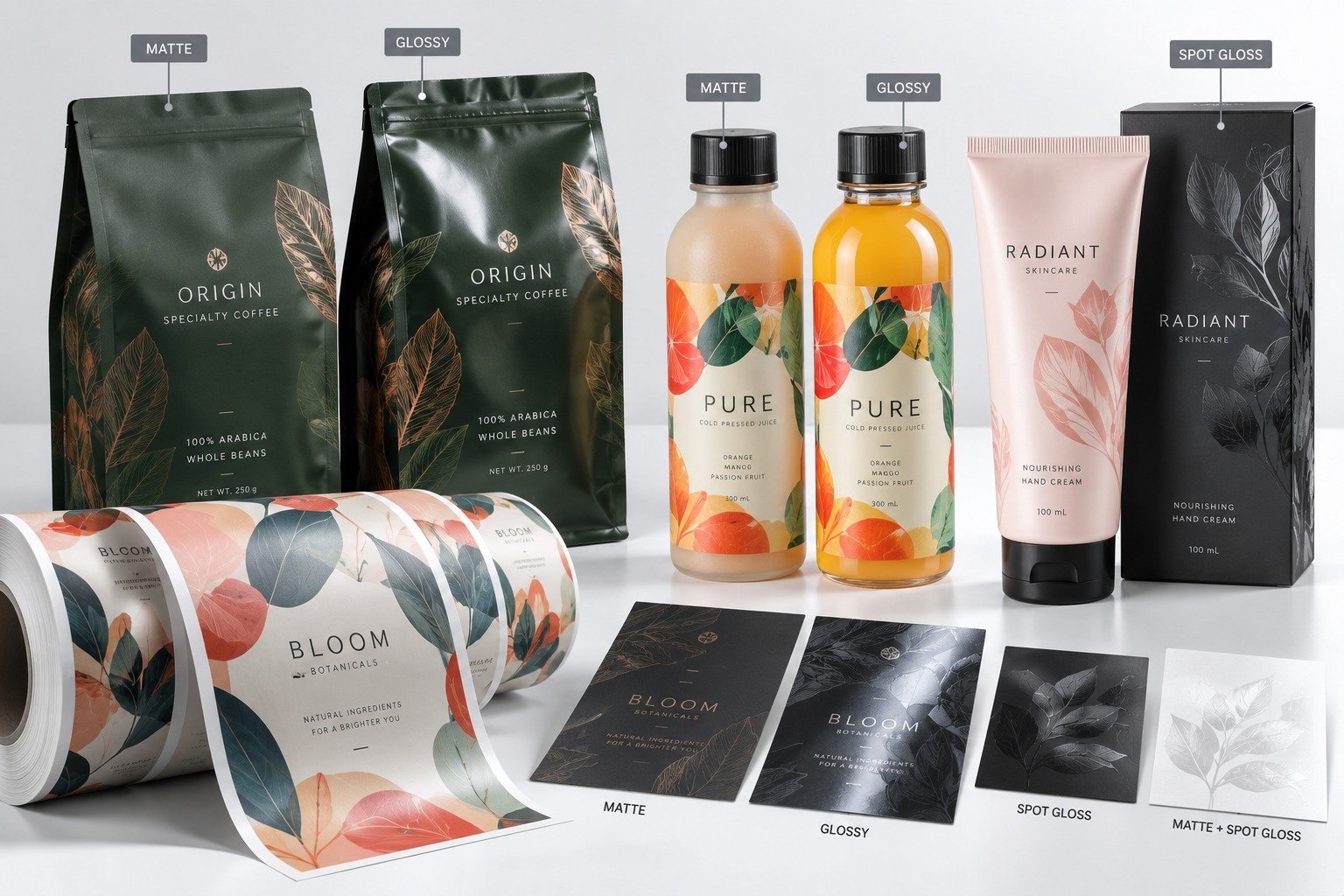
A self-adhesive label, also called a pressure-sensitive label, does not need water, heat, or solvent activation. Pressure helps the adhesive make contact with the product surface.
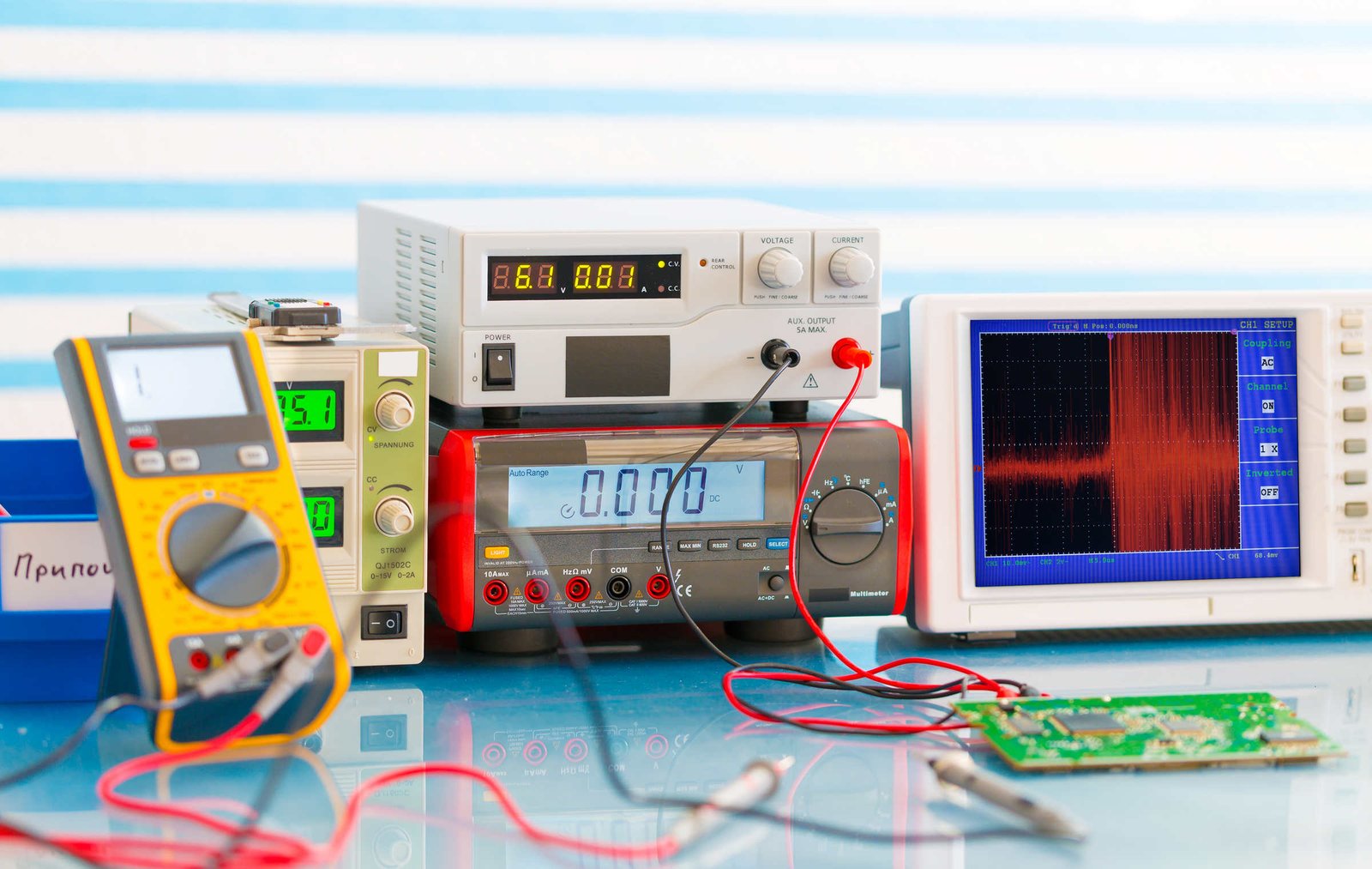
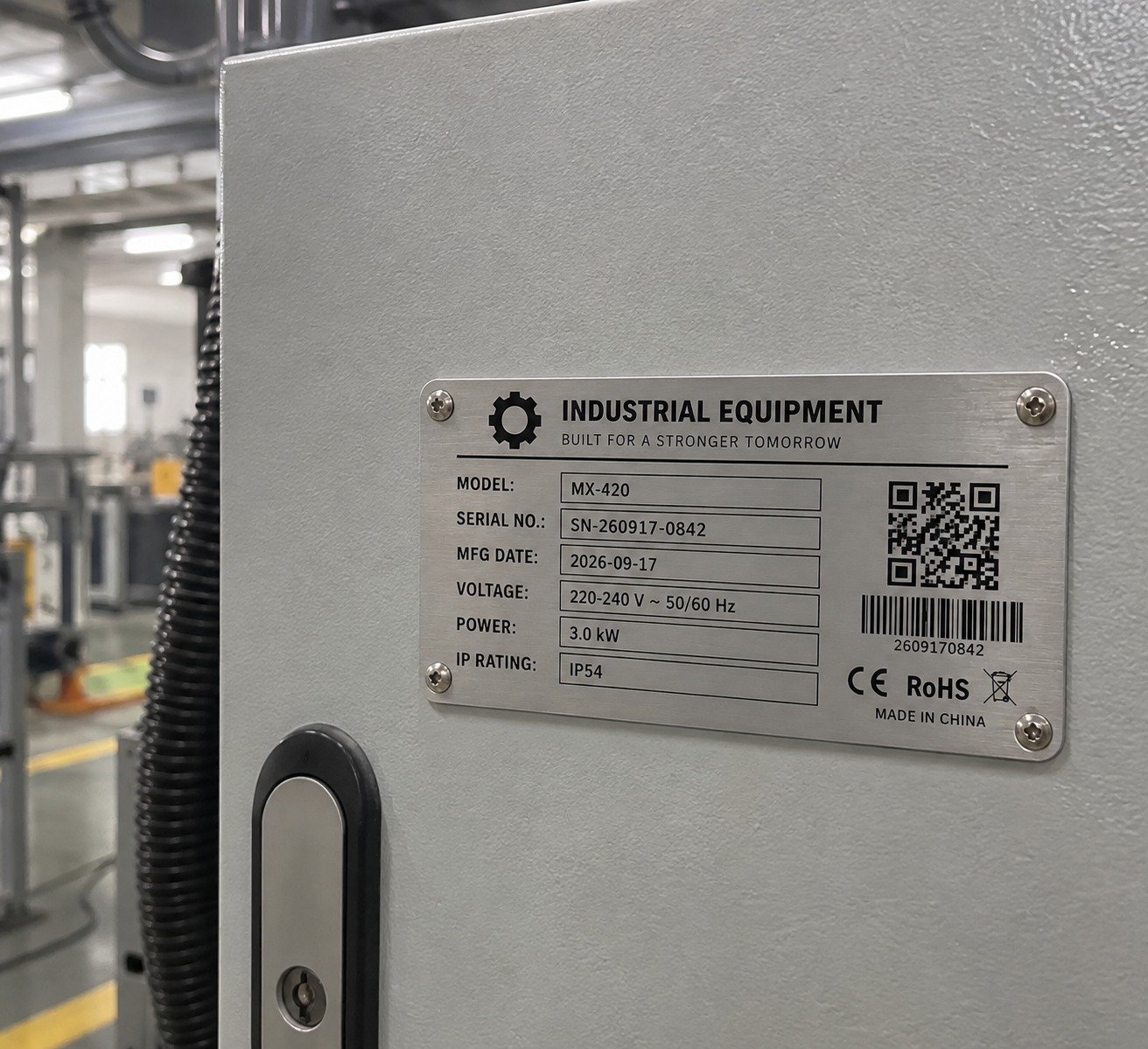
The construction can be simple or highly specified. A packaging label may focus on color and information. An equipment label may focus on traceability, readable data, handling, and the target surface.
Label structure
The face material is the printable top surface. It carries product names, graphics, ingredients, instructions, symbols, barcodes, QR codes, serial numbers, and brand information.
The adhesive bonds the label to glass, plastic, paperboard, metal, flexible packaging, or another target surface. Permanent, removable, high-tack, and surface-matched directions should be discussed around the intended use.
The release liner supports the label before application. It is removed when the label is applied manually or dispensed from a roll.
Materials and formats
Common for cartons, retail packs, product information, and dry packaging.
PVC and PET options for product surfaces, handling, and application-specific needs.
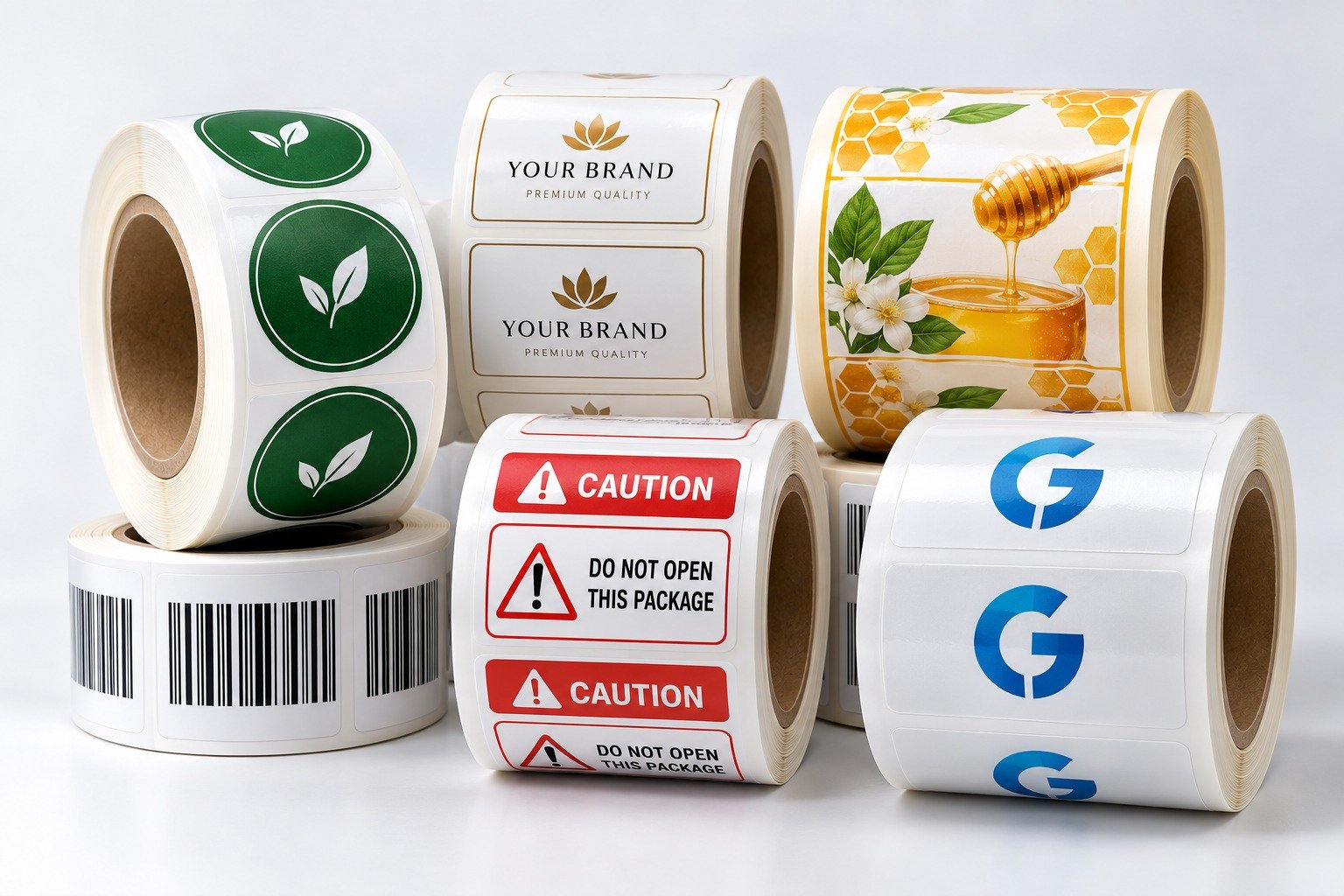
Organized supply for repeated manual application and applicable workflows.
Custom external contours for logos, icons, promotions, and branded designs.
Common uses
In every case, product surface, use environment, visual objective, information density, and application method guide selection.
Selection guidance
Start with the actual product. Confirm the surface, shape, storage and handling conditions, required text and data, artwork, size, adhesive direction, material, finish, and delivery format.


Frequently asked questions
These terms usually describe labels that apply with pressure-sensitive adhesive without water, heat, or solvent activation.
Share product surface, environment, handling, visual target, artwork, and application method for review.
Yes. Include approved data structure, code type, label size, and readability requirements in the project brief.
Summary
Self-adhesive labels are more than printed graphics. Face material, adhesive, release liner, format, finish, and data layout work together. A clear product brief helps buyers select a practical construction for packaging, branding, information, and identification.
Published: September 13, 2026
Project inquiry
Send product photos, artwork, dimensions, quantity, target surface, and application conditions for a relevant discussion.