
Custom label pricing follows the confirmed specification: quantity, dimensions, material, adhesive, artwork, colours, finishing, format, data needs, packing, and delivery requirements. A comparable quote defines these inputs rather than relying on a product name alone.
StikTec label buying guide
Custom Label Pricing Guide
Custom label pricing is based on the complete project specification rather than one universal price per label. Quantity, label size, material, adhesive, printing, finishing, shape, data requirements, packaging format, and delivery needs can all affect the final quotation.
For B2B buyers, a useful label quote starts with the product, package, application, artwork, and order plan. A price request that names only a label type and total quantity leaves too many variables open for a comparable quotation.
In this guide
- Price drivers, quote comparison, and realistic budgeting questions
- Size, artwork, materials, adhesives, finishes, and production planning
- Order format, variable data, delivery scope, and quote preparation
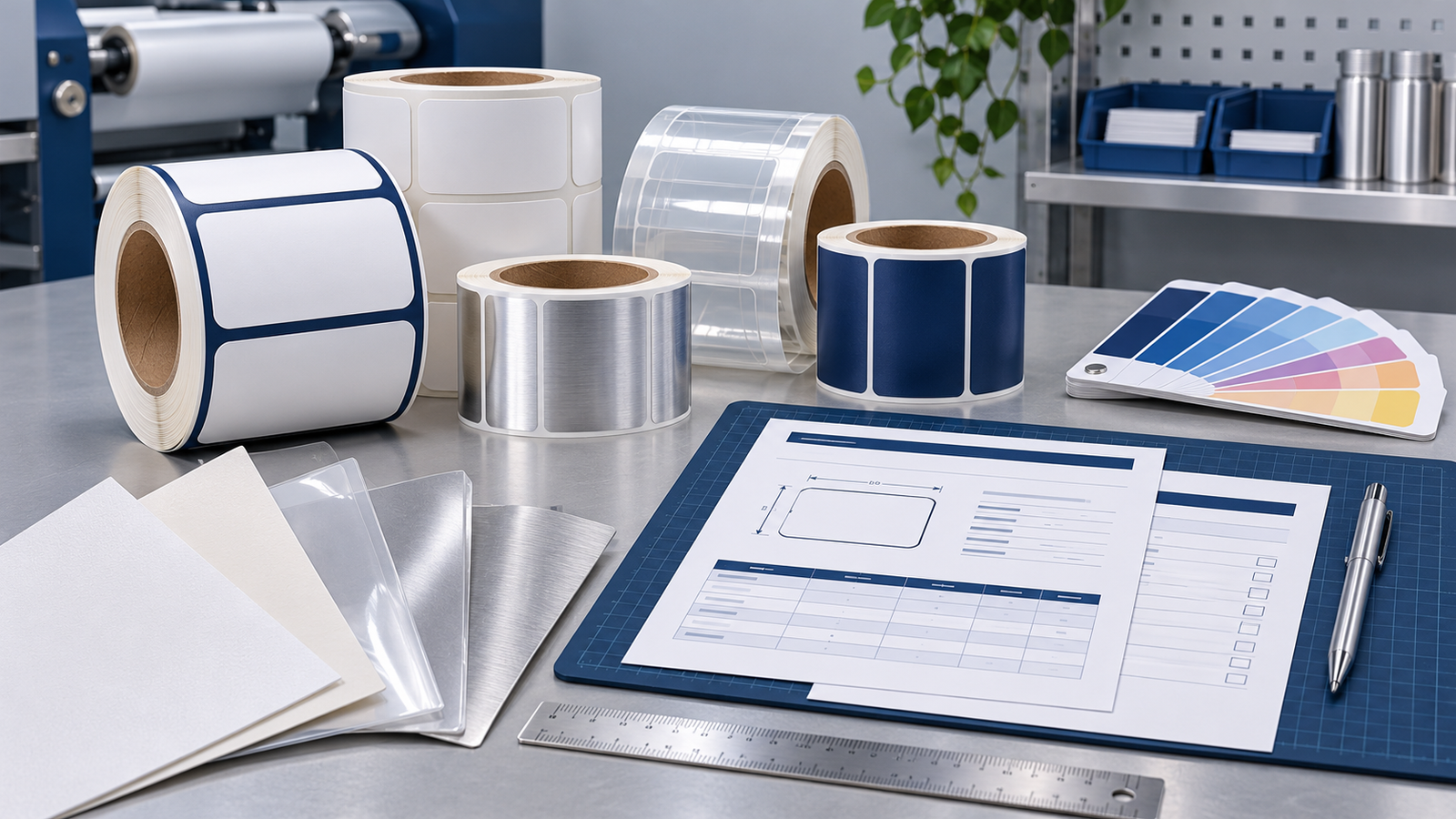
Overview
What Determines Custom Label Pricing?
Direct definition: Custom label pricing is the total cost calculated from a label’s confirmed production specification. Because labels differ in dimensions, materials, adhesives, artwork, finishing, quantities, and application requirements, an accurate quote needs more than a product name and quantity.
Two labels of the same dimensions may have very different custom label pricing. One may be a simple paper label for dry packaging. Another may need durable film, a specialty adhesive, variable data, a protective finish, and a roll format for automated application.
Good quotation work is therefore a comparison exercise. It identifies what the buyer needs, which parts are fixed, which parts need technical confirmation, and which options should be compared rather than assumed.
| Two Labels of Similar Size | Example Specification Difference |
|---|---|
| Basic product label | Paper material, standard adhesive, simple print, dry indoor packaging. |
| Beverage bottle label | Film material, moisture exposure, curved surface, roll application. |
| Industrial identification label | Durable material, serial number, barcode, and environmental requirements. |
| Premium cosmetic label | Metallic effect, foil, embossing, matte laminate, multiple finishes. |
| Frozen-food label | Cold-chain material and adhesive requirements, moisture and freezer exposure. |
| Security or traceability label | Controlled data, serialisation, specialty construction, and verification needs. |
Order planning
How Quantity Affects Label Pricing
Custom label orders can include fixed and variable production activities. A larger quantity may lower unit cost in some cases because preparation work is distributed across more labels. That does not make a larger order automatically better: total purchase cost, storage, obsolete inventory risk, and cash flow also matter.
Ask for options that match the launch, reorder, and annual demand you actually expect. A comparison is only useful when the dimensions, material, artwork count, finish, roll format, and packing assumptions are kept consistent.
Buyer checklist
- State quantity required for each individual design.
- Identify one-time, monthly, seasonal, or annual demand.
- Clarify whether each SKU has different artwork.
- Ask for options at several relevant quantities.
- Consider storage, revisions, and product shelf life before consolidating orders.
- Confirm repeat orders retain the same material, dimensions, and finish.

| Quantity Consideration | Pricing Question |
|---|---|
| Small pilot order | Is the purpose sampling, market testing, or a limited launch? |
| Regular reorder | Can approved artwork and specifications be reused? |
| Seasonal demand | Will unused labels become outdated after a product, regulation, or artwork change? |
| Annual consumption | Is it useful to request pricing at realistic yearly quantities? |
| Multiple SKUs | Is quantity divided across several designs, languages, flavours, or pack sizes? |
| Inventory capacity | Can labels be stored safely and kept traceable before use? |
Dimensions and converting
How Label Size and Shape Affect Cost
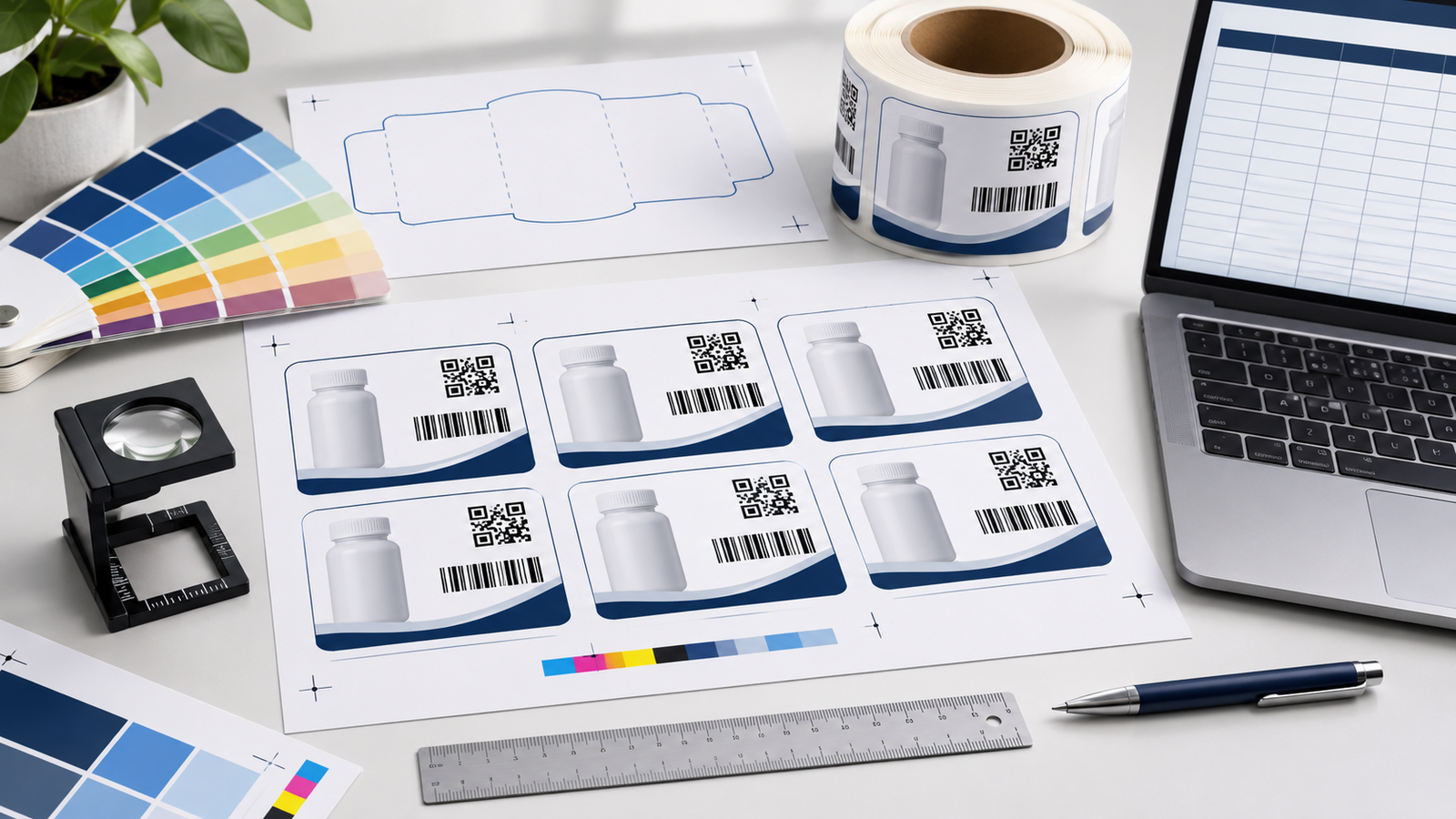
Finished dimensions affect material use, press area, die-cutting, waste, packing, and application feasibility. Shape can affect cutting complexity and the practical amount of material around the finished label.
A custom shape is not automatically more expensive in every project. Cost depends on the final tooling, material, quantity, and production process. Provide a die line or clear shape reference so the quotation is based on the label that will actually be produced.
| Label Feature | Potential Quote Impact | Buyer Action |
|---|---|---|
| Width and height | Larger labels generally use more material. | Provide exact finished dimensions. |
| Shape | Circles, rectangles, ovals, and custom contours may have different requirements. | Provide a die line or reference. |
| Corner radius | Rounded corners may affect die-cutting details. | Confirm required corner treatment. |
| Wraparound size | Needs accurate container circumference and overlap planning. | Provide container dimensions. |
| Very small label | May need special handling for text, codes, or dispensing. | Share the application requirement. |
| Complex contour | May affect tooling and waste. | Provide final vector artwork where possible. |
Construction direction
How Materials and Adhesives Affect Pricing
Material selection should be driven by use conditions, not only by budget. An unsuitable low-cost label can create downstream cost through relabeling, rejected packaging, or poor appearance. Final material and adhesive costs should be quoted against the actual project specification.
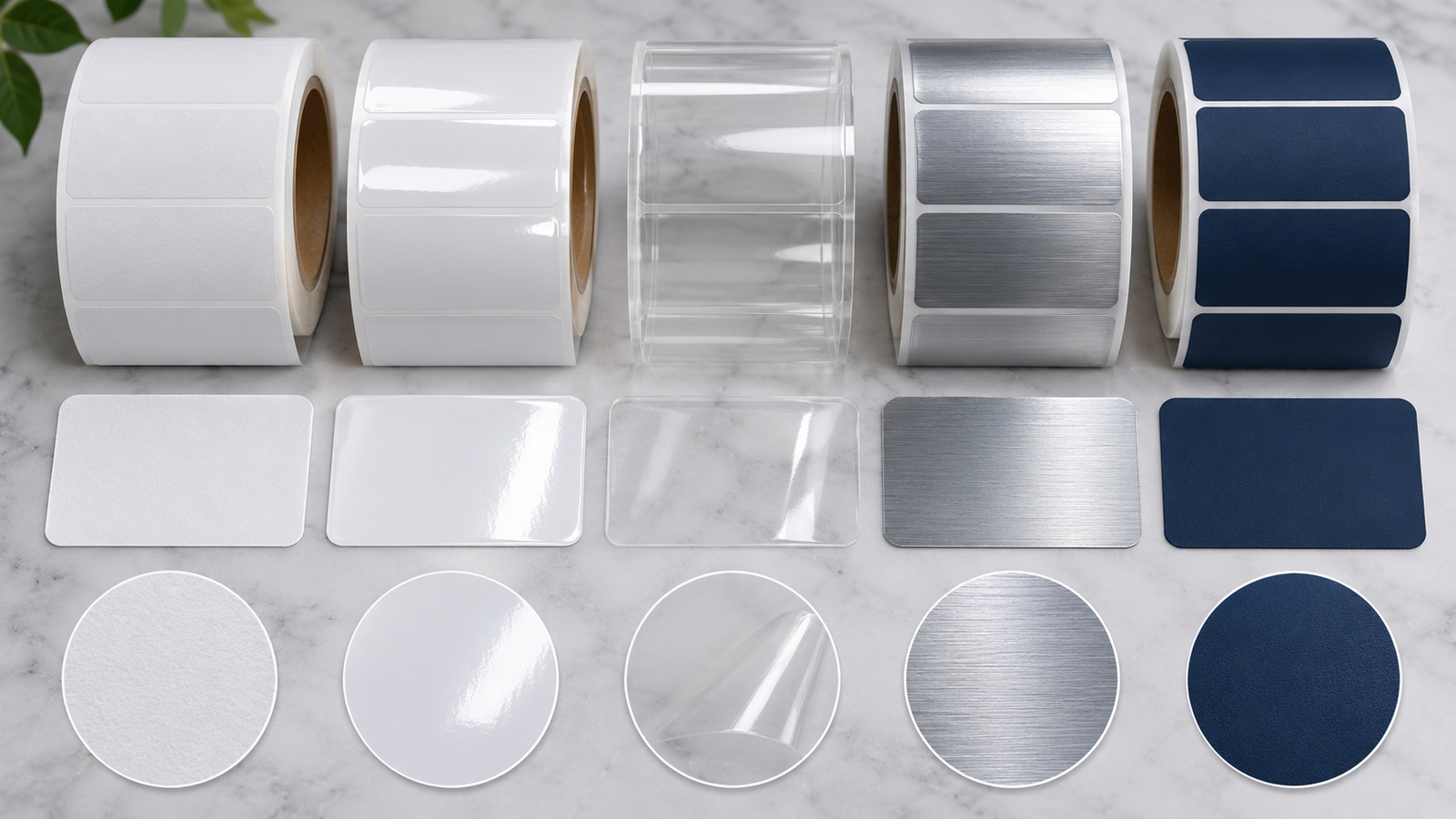
Paper, PET, PVC, PP, PE, clear film, metallic material, permanent adhesive, removable adhesive, and specialty adhesive directions are not interchangeable. The buyer should state the package surface, handling, temperature, moisture, chemical, or durability requirements rather than assuming a material is appropriate.
| Material or Adhesive Direction | Typical Consideration | Cost-Planning Question |
|---|---|---|
| Paper | May suit dry and lower-exposure applications. | Is paper appropriate for the product environment? |
| PET material | May be considered for durable identification needs. | Are durability or environmental conditions part of the requirement? |
| PVC material | May be considered for selected graphic or flexible applications. | Does it fit intended use and market requirements? |
| PP or PE film | May be considered for moisture-prone or flexible packaging. | Is conformability or moisture exposure important? |
| Clear or metallic film | Changes visual effect and contrast requirements. | Are white ink or opacity layers required? |
| Specialty adhesive | May be needed for demanding surfaces or conditions. | What real performance requirement justifies it? |
Artwork and colour
How Printing Requirements Affect Cost
Artwork affects more than appearance. Colours, print layers, special inks, variable information, white ink, metallic effects, and proofing can influence the production plan. Multiple language versions and several SKUs can split one total quantity across several separate artworks.
Artwork preparation checklist
- Final dimensions, bleed, vector logos, and readable fonts or outlined text.
- CMYK or approved colour references where relevant.
- White-ink, metallic, foil, or spot-colour direction.
- Barcode or QR-code content, type, size, and placement.
- Data file and mapping for variable fields.
- Separate file for every SKU, language, or product version.
- Clear revision name and approval contact.
| Artwork Requirement | Potential Quote Consideration |
|---|---|
| Standard full-colour artwork | Confirm print method, colour expectations, and artwork readiness. |
| Spot or brand colours | May need additional colour-management requirements. |
| White ink | May be relevant on clear, metallic, or coloured materials. |
| Variable data | May need spreadsheet preparation, mapping, and record review. |
| Barcode or QR code | Needs defined content, size, contrast, and scan expectations. |
| Multiple versions | Can increase design count, setup, and file management. |
Surface effects
How Finishing Changes Custom Label Cost
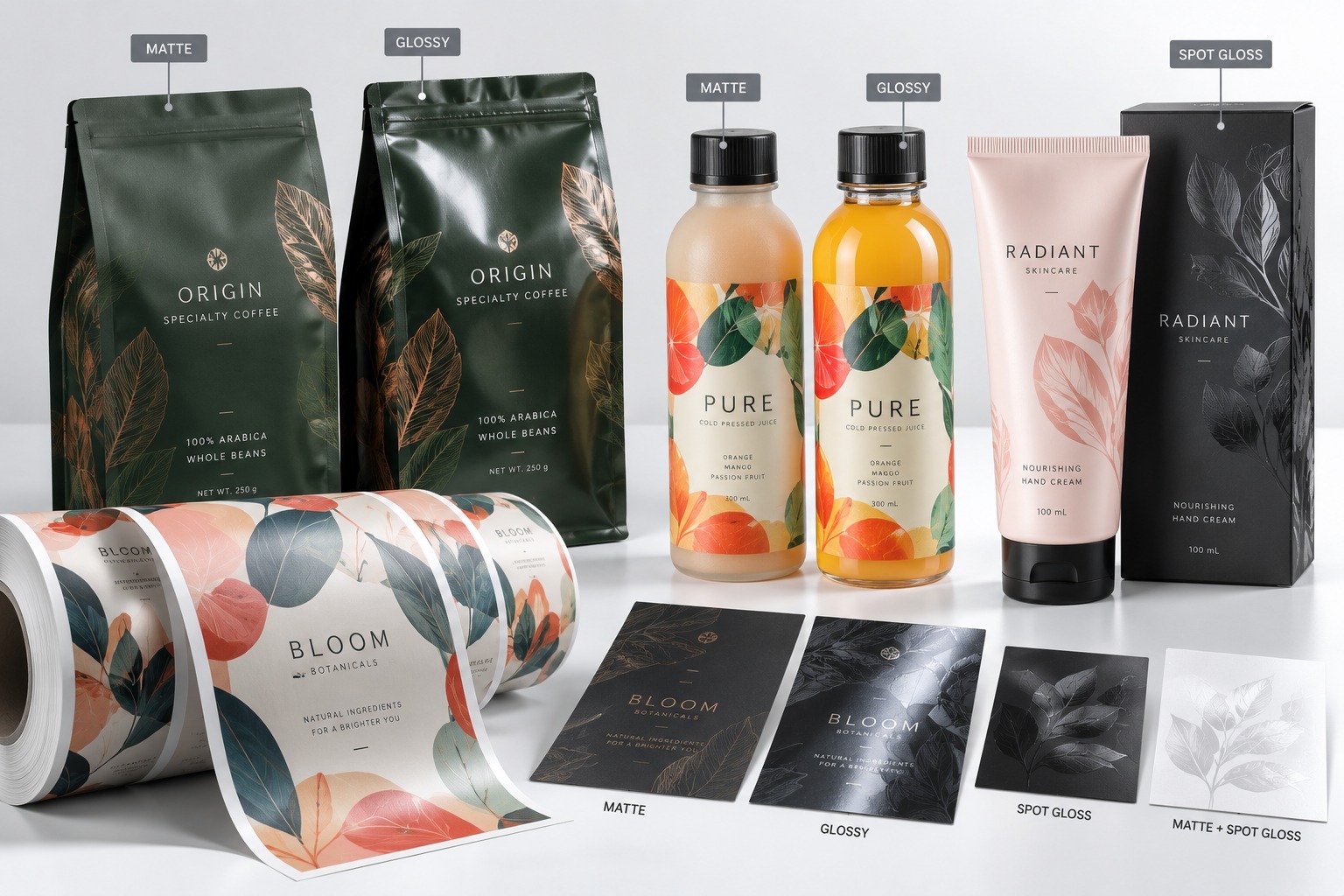
Finishing can add visual impact, surface protection, or tactile effects. It can also add materials, tooling, handling, or production steps. Quote every effect as part of the complete label construction rather than assuming it provides durability, security, or compliance.
Consider whether an effect needs to cover the entire label or only a controlled design area. A targeted effect can be a useful comparison point, but its suitability should be confirmed for the artwork and project.
| Finish or Process | Possible Purpose | Quote Question |
|---|---|---|
| Gloss or matte varnish | Changes shine, emphasis, or glare. | Is it needed across the full label or selected areas? |
| Lamination | May add specified surface protection. | Is protection required for actual handling conditions? |
| UV effect | Adds selected visual contrast. | Is the effect essential to presentation? |
| Foil or metallic substrate | Adds metallic detail or base. | Can it be limited to key elements? |
| Embossing | Adds a raised tactile effect. | Is it necessary for the product position? |
| Security feature | May support a brand-protection program. | What is the full system requirement? |
Format and logistics
Roll, Sheet, and Application Requirements
The final delivery format can affect converting, packing, transport, and application efficiency. A roll for a machine line may need defined orientation, core size, maximum outside diameter, pitch, web width, and labels per roll. A sheet or individual-label order needs equally clear handling and packing instructions.
Machine-Applied Label Requirements
- Label orientation and unwind direction.
- Core size and maximum roll outside diameter.
- Labels per roll, gap or pitch, and web width.
- Machine model or application method.
- Required packing and pallet information.
| Format | Typical Use | Information Needed for a Quote |
|---|---|---|
| Roll labels | Manual dispensers or automatic labeling lines. | Direction, core, outside diameter, labels per roll, gap, machine details. |
| Sheet labels | Manual application or smaller projects. | Sheet size, count per sheet, printer or handling needs. |
| Individual labels | Asset tags, samples, manual packing, special handling. | Packing quantity, backing format, separation requirements. |
| Kiss-cut sticker sheets | Promotional or multi-design sets. | Sheet size, cut line, backing, artwork count. |
| Variable-data labels | Traceability, serialisation, barcode jobs. | Data format, sequence rules, record count, review process. |
Controlled information
Variable Data, Versions, and SKU Complexity
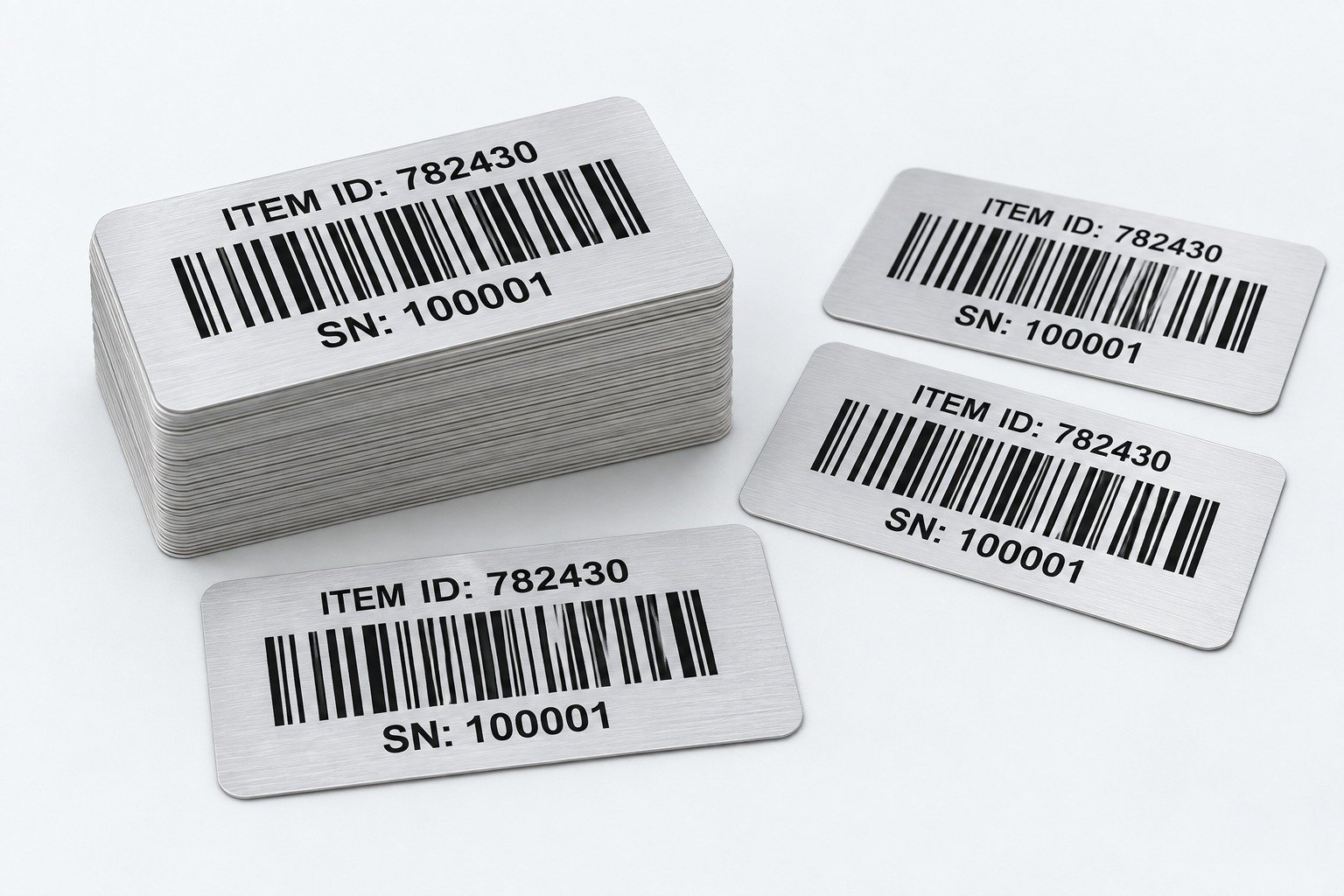
Variable data can include serial numbers, barcodes, QR codes, batch codes, dates, product names, languages, or location details. Each requirement should be quoted with clear data-management instructions, approved inputs, and ownership of review steps.
Variable data printing does not automatically guarantee code accuracy or scan performance. Buyers should define data approval, content verification, and any scanning or inspection requirements before production.
| Requirement | Information Needed |
|---|---|
| Serial numbers | Starting and ending number, prefix, suffix, increment, and quantity. |
| Barcodes | Symbology, encoded data, size, placement, and scan requirements. |
| QR codes | Approved destination URL or encoded content. |
| Batch codes and dates | Format, location, source data, and human-readable text. |
| Multiple SKUs or languages | Artwork count, quantity per version, market list, and approval control. |
| Personalized labels | Data file, field mapping, privacy requirements, and proof process. |
Commercial scope
Consider Delivery and Total Landed Cost
The label unit price is not always the only purchasing cost. Compare the total scope of each quotation, including packing, proof or sample needs, project-specific preparation, delivery destination, transport method, agreed trade terms, and urgency.
A lower unit price may not represent the lowest total cost if material, quality requirements, packing, delivery terms, or risk controls are different. Request clarification where one proposal includes something another does not.
| Cost Area | Questions to Ask |
|---|---|
| Production quote | Does it use the same material, adhesive, size, finish, and quantity? |
| Tooling or setup | Are project-specific preparation or tooling requirements included? |
| Proofs and samples | What proof or sample scope is included? |
| Packing | How are rolls, sheets, or individual labels identified and packed? |
| Shipping | What transport method, destination, and Incoterms apply? |
| Reorders | Are assumptions based on unchanged specifications? |
Buyer handover
Prepare a Better Custom Label Quote Request
- Define the product and packaging surface.
- Confirm label dimensions and shape.
- Identify quantity for each SKU or design.
- Describe application environment and performance needs.
- Discuss material, adhesive, and finish requirements.
- Provide artwork or a clear content brief.
- Define barcode, QR code, batch code, or variable-data needs.
- Specify roll, sheet, or individual-label format.
- State proof, sample, test, packing, and delivery requirements.
- Request comparable options where relevant.
Complete quote-request checklist
- Product application, package surface, environment, dimensions, shape, and quantity per version.
- Artwork, colour, material, adhesive, finish, special ink, foil, laminate, UV, or embossing needs.
- Barcode, QR code, serial, batch code, or variable-data details.
- Format, machine requirements, sampling, proofing, testing, packing, shipping, and destination.
Quote comparison
Avoid Common Custom Label Pricing Mistakes
| Common Mistake | Better Approach |
|---|---|
| Comparing only price per label | Compare complete specification and total delivered scope. |
| Requesting a quote without dimensions | Provide finished width, height, shape, and application details. |
| Combining all SKU quantities into one total | State quantity required for each design or version. |
| Ignoring adhesive requirements | Describe the package surface and end-use environment. |
| Selecting material only by lowest price | Match material to actual performance needs. |
| Forgetting finish or roll requirements | Specify every effect, orientation, core, gap, and labels-per-roll need. |
| Sending incomplete artwork | Share print-ready files or identify preparation work. |
| Ignoring delivery and packing | Compare shipping terms, packing, and total landed cost. |
Practical comparison workflow
Make Custom Label Quotes Comparable
Procurement teams frequently receive quotations built from different assumptions. One quote may be based on a paper label, another on film. One may include a full roll format while another assumes sheets. One may use a single artwork quantity while another correctly splits the order across several SKUs. A comparison begins by recording those differences instead of treating them as interchangeable.
Set up a short comparison sheet for every live project. List the finished size, shape, quantity per design, number of designs, material direction, adhesive direction, print colours, special effects, format, packing, delivery destination, and any proof or testing requirement. If a proposal is silent on one item, ask the supplier to state the assumption before selecting it.
It is also helpful to separate technical scope from commercial scope. Technical scope defines what must be made and how it must function. Commercial scope covers order quantity, packing, payment and trade terms, delivery destination, and timing. Keeping the two together in one approved brief gives buyers, engineers, artwork teams, and suppliers the same reference point.
Before accepting a quote, confirm
- The quoted size and shape match the approved label layout.
- The quantity is stated for every SKU, language, or version.
- Material and adhesive assumptions match the actual package and end use.
- Colours, white ink, foil, varnish, laminate, and tactile effects are fully listed.
- Variable-data rules, code content, and approval responsibilities are identified.
- Roll, sheet, individual-label, and packing requirements are not left open.
- The delivery destination and trade terms are understood by both parties.
| Comparison Item | Why It Must Match | Useful Evidence |
|---|---|---|
| Finished label size | Material usage, press area, layout, and die-cutting are based on actual dimensions. | Approved drawing, dieline, or dimensions in millimetres. |
| Quantity per artwork | A combined total can hide the production impact of separate designs. | SKU list with quantities by version and language. |
| Material and adhesive | Different constructions can behave differently on the same package. | Package description, sample, surface condition, and use environment. |
| Print and finish scope | Effects and layers can change preparation and converting requirements. | Artwork notes, colour references, and finish callouts. |
| Format and packing | Application equipment and warehouse handling can require a specific delivery format. | Machine specifications, roll direction, packing plan, or handling instructions. |
| Delivery scope | Destination, transport, and trade terms affect the commercial comparison. | Delivery address, preferred transport, and agreed Incoterms. |
Budget planning
Build a Quote Request Around Real Decisions
A budget is most useful when it is connected to a real decision. For example, a brand team may need to compare a standard visual direction with a premium presentation direction. A packaging engineer may need to compare a label applied by hand with one supplied in a specified roll format. A product manager may need one quotation for a launch quantity and another for an expected replenishment quantity.
Describe these alternatives as separate, complete scenarios. Do not ask a supplier to decide the end-use requirement from a broad request such as “the cheapest option.” Instead, explain which elements are fixed, which are optional, and which need technical advice. This produces a clearer record and avoids a false comparison between labels that serve different purposes.
When comparing material alternatives, preserve the actual label dimensions, artwork count, application route, and delivery requirement. When comparing quantity alternatives, preserve the same construction. When comparing finishes, identify whether the effect is full coverage or a selected design area. Each approach makes the cost discussion more specific without promising a particular saving.
Useful quotation scenarios
- Launch order versus recurring approved reorder.
- Single SKU versus multiple language or flavour versions.
- Paper visual direction versus a specified film construction.
- Standard print direction versus a quoted foil, laminate, or UV alternative.
- Manual sheet use versus a machine-applied roll requirement.
- Static artwork versus controlled serial, barcode, or QR-code data.
Specification control
Use an Approved Brief for Every Revision
Most quotation changes occur when the specification changes after the first request. That is normal in a custom label project, but it should be visible. If the size changes, the label moves to a new package, a material changes, a language is added, a barcode is introduced, or a finish is revised, ask for the quotation to be reviewed against the current version rather than relying on an earlier estimate.
Give the project a simple revision system. The artwork file, dieline, product sample, quote request, approval record, and purchase order should refer to the same version name. This does not add unnecessary administration; it helps prevent a supplier from quoting one version while a buyer expects another. It is particularly important when several departments contribute requirements.
For repeat orders, confirm that the product, artwork, quantity, packing, destination, and any data requirement are unchanged. A repeat-order reference can streamline communication, but it should not replace a check of the live specification. An approved construction for one product or destination should not automatically be assumed suitable for a revised pack or new use condition.
Revision-control checklist
- Use one visible revision name on artwork, dieline, and quote request.
- Record product sample and packaging-surface changes.
- Identify new languages, SKUs, codes, dates, or market versions.
- Separate optional visual effects from mandatory performance requirements.
- Confirm who gives final artwork and data approval.
- Request confirmation if delivery destination or packing scope changes.
FAQ
Frequently Asked Questions About Custom Label Pricing
Preparation and production activities may be distributed across a larger or smaller run. Consider total order value, storage capacity, and obsolete-label risk alongside unit price.
No. The effect depends on final tooling, die-cutting requirements, material, quantity, and converting process. Provide the required shape for an accurate quotation.
Foil, embossing, lamination, UV, metallic effects, and specialty finishes can add materials or production steps. Their effect depends on the complete specification.
Provide dimensions, quantity per design, material and adhesive needs, artwork, finishing, application conditions, label format, and delivery requirements.
It depends on quantity, production method, application needs, roll specifications, and packing. Compare the format that supports the actual application process.
Serial numbers, barcodes, QR codes, dates, and personalized records can add data preparation, mapping, proofing, inspection, or record-control requirements.
Contact StikTec with label dimensions, quantity, artwork, material needs, application conditions, finishing requirements, and delivery destination. Final pricing and available options should be confirmed for the specific project.
Summary
Get a Clear Custom Label Quote
Custom label pricing is specification-based. Quantity alone is not enough for an accurate quote: material, adhesive, size, finishing, format, artwork, data requirements, packing, and delivery all matter. The best comparison is a like-for-like comparison of the whole commercial and technical scope.
Give suppliers a complete brief, separate quantities by design, and confirm the practical application before selecting an option. StikTec can discuss buyer-defined needs for pressure-sensitive labels, roll labels, die-cut stickers, and barcode labels.
Discuss a custom label quotationProject inquiry
Request a Custom Label Quote
Share your label dimensions, quantity, artwork, material needs, application conditions, finishing requirements, and delivery destination. StikTec can review the project details with you.
Related articles
Related Label Guides
What Is Die-Cutting in Custom Sticker Printing?
Learn how die-cutting affects shapes, contours, formats, and production planning.
What Is Variable Data Printing?
Explore serial numbers, barcodes, QR codes, dates, and batch codes.

What Are Self-Adhesive Labels?
Understand facestock, adhesive, and release-liner choices.